A Baker's Guide to Storing Meringue Mix
Storage best practices for meringue mix — covering environment, containers and maintaining whipping performance.
KEY TAKEAWAY
Meringue mix, like other dry egg ingredients, requires proper storage to maintain its functional performance. Moisture exclusion is particularly important, as even small amounts of absorbed moisture can affect whipping behaviour.
Moisture: The Primary Threat
Meringue mix is a dry, hygroscopic product — it readily absorbs moisture from the surrounding environment. Moisture absorption causes clumping, affects the powder's ability to dissolve cleanly in water, and can impair foaming performance.
In a bakery environment, where steam, water and wet ingredients are constantly in use, protecting meringue mix from moisture exposure requires deliberate attention to storage practices.
Storage Environment
Store meringue mix in a cool, dry location away from ovens, steam sources, dishwashers and other equipment that generates heat or humidity. A dedicated dry-storage area, separated from the production floor, is ideal.
The storage area should be clean, well-ventilated and free from pests. Meringue mix should be stored off the floor on shelving or pallets, and away from strongly scented materials that could impart off-flavours.
Container Management
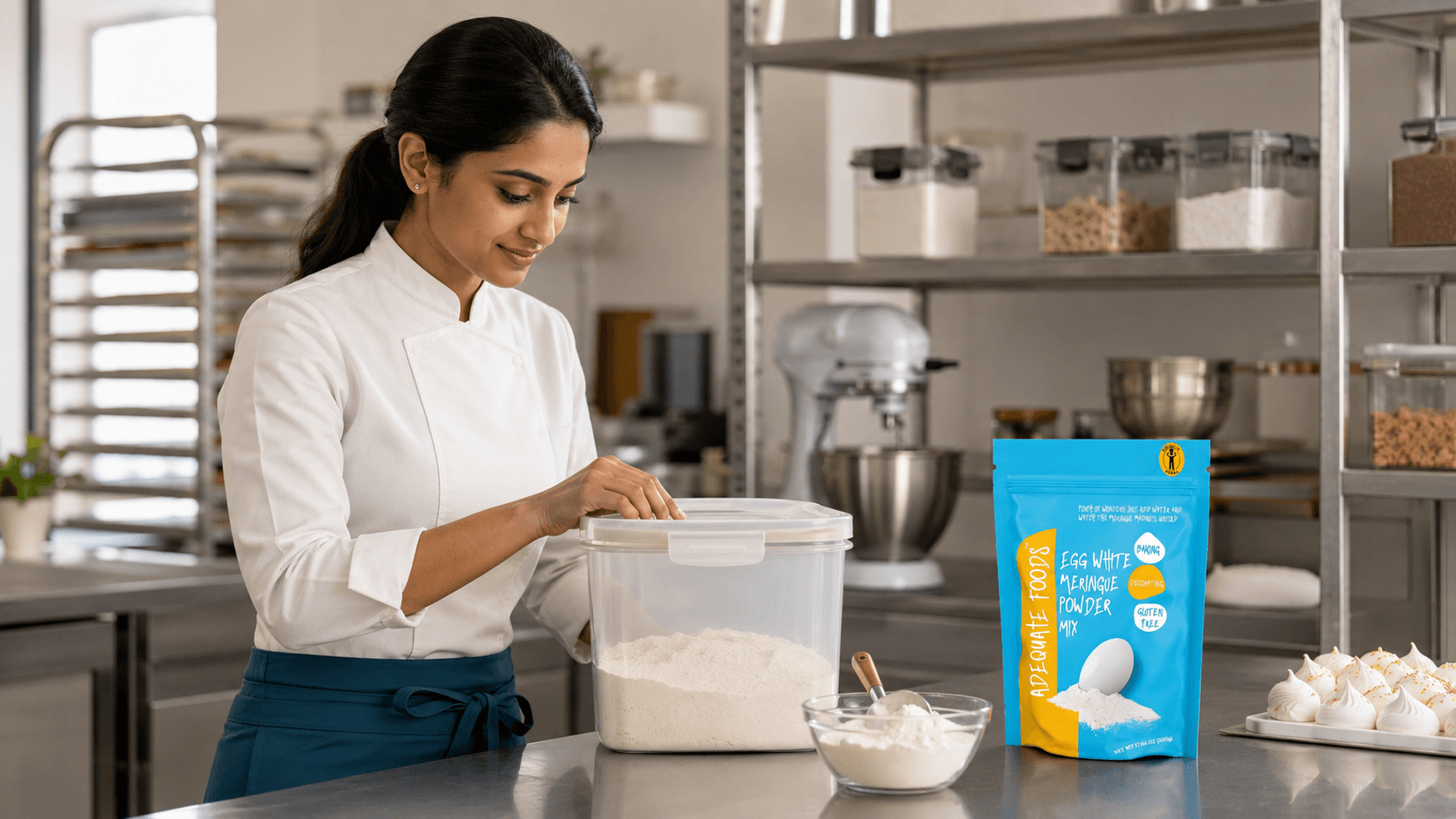
Keep meringue mix in its original sealed packaging until needed. Once opened, reseal the package tightly after each use, expelling as much air as possible. If the original packaging does not support effective resealing, transfer the remaining powder to a clean, dry, airtight container with a secure lid.
Label all containers with the product name, date opened and expiry date. Use clean, dry scoops exclusively — never introduce moisture from wet utensils into the container.
Monitoring Quality
Periodically assess stored meringue mix for signs of quality degradation: clumping, discolouration, off-odours or changes in whipping performance. If the powder does not whip to the expected consistency or if the resulting meringue is not as glossy or firm as usual, the powder may have absorbed moisture or exceeded its optimal use window.
Rotating stock on a first-in, first-out basis and using product within the manufacturer's recommended timeframe after opening are the most effective practices for maintaining consistent quality.
MORE FROMTHE LAB.
Continue exploring the science, applications and possibilities behind modern egg ingredients.