Egg Yolk Powder for Mayonnaise Applications
How egg yolk powder supports stable emulsion formation in mayonnaise production.
KEY TAKEAWAY
Mayonnaise is fundamentally an emulsion of oil in water, stabilised by egg yolk. Using egg yolk powder in mayonnaise production offers consistency, food safety advantages and simplified handling compared to fresh yolks.
Mayonnaise as an Emulsion
Mayonnaise is one of the simplest and most demanding emulsions in food production. At its core, it is oil dispersed as tiny droplets in a water-based phase (vinegar or lemon juice), stabilised by the emulsifying agents in egg yolk. The oil content can exceed 70%, making mayonnaise an extremely concentrated emulsion that places significant demands on its emulsifier.
The quality of a mayonnaise depends on the fineness and uniformity of the oil droplets, the stability of the emulsion over time and the sensory properties of the finished product — smoothness, glossiness, flavour and mouthfeel. Egg yolk is central to all of these.
Egg Yolk Powder in Mayonnaise Formulation
Egg yolk powder provides the lecithin and lipoproteins needed for emulsion formation in a concentrated, shelf-stable format. For mayonnaise manufacturers, this means consistent emulsifying capacity from batch to batch, without the variability introduced by fresh egg yolk — which can differ in lecithin content depending on the hen's diet, age and the egg's freshness.
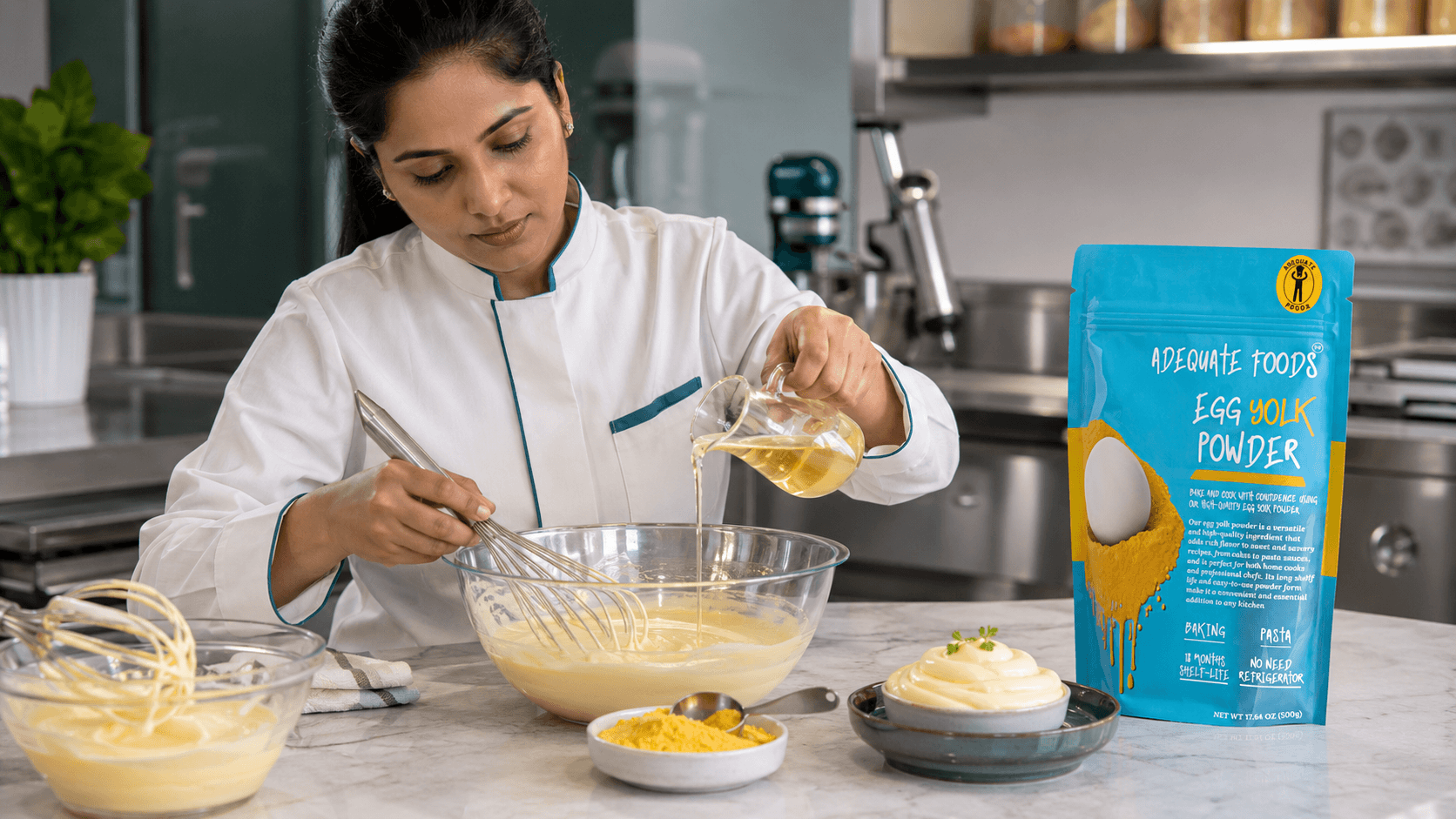
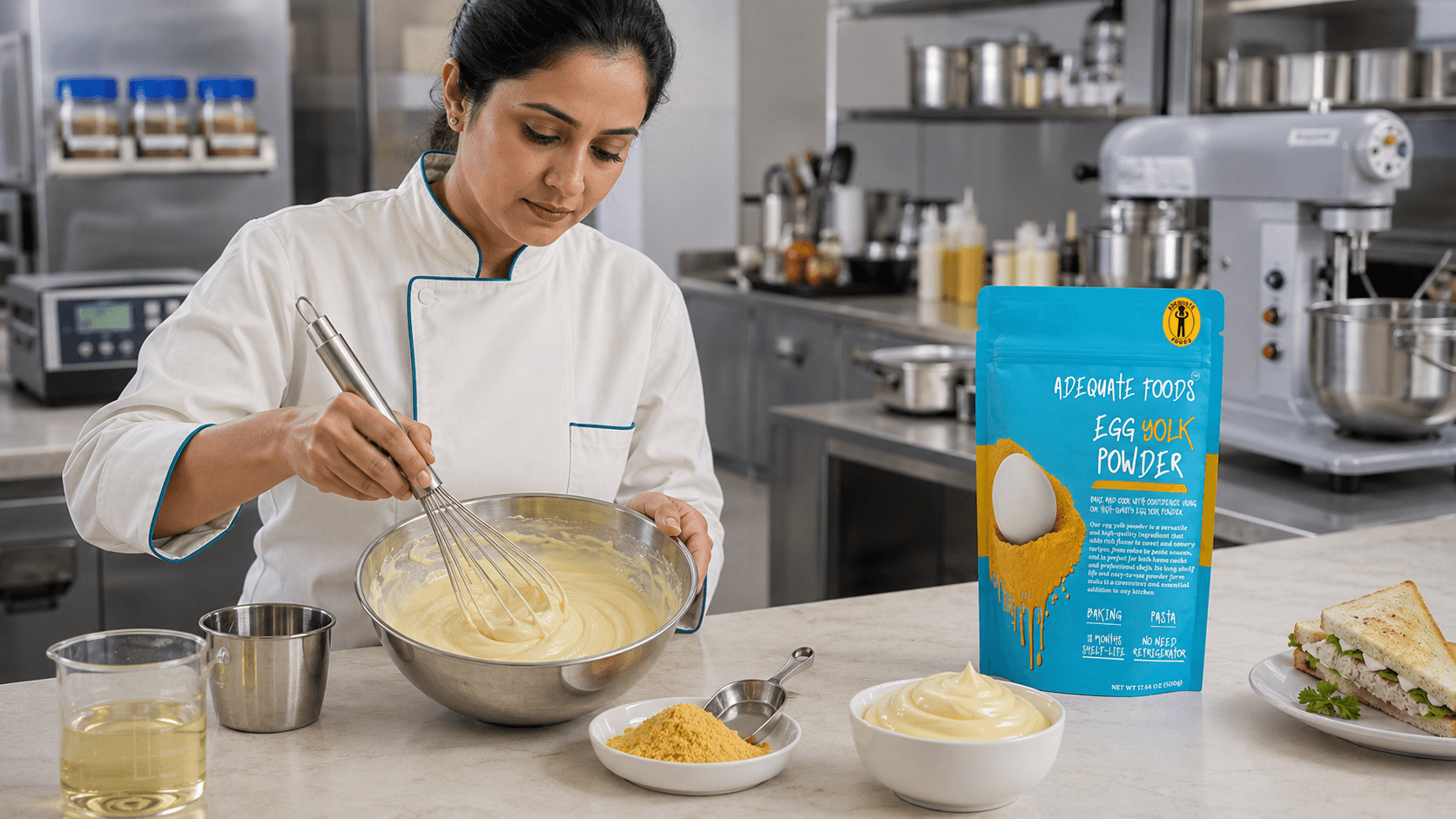
The powder is typically reconstituted with the aqueous phase of the mayonnaise (water, vinegar, lemon juice) before oil addition begins. This ensures complete hydration of the emulsifying components before they are called upon to stabilise the oil-water interface.
Production Consistency
In commercial mayonnaise production, consistency is a requirement rather than a goal. Retailers and foodservice customers expect the product to look, taste and perform identically across production lots. Using egg yolk powder supports this expectation by removing a significant source of ingredient variability.
Batch-to-batch consistency in emulsifying performance translates directly to consistent product viscosity, appearance and shelf stability. For manufacturers producing to tight specifications, this reliability reduces the need for mid-production adjustments and helps maintain quality control targets.
Food Safety
Raw egg yolk is a potential vector for foodborne pathogens. In traditional mayonnaise production, the acid content helps control microbial risk, but the raw yolk itself introduces handling and sourcing concerns that must be managed carefully.
Egg yolk powder, produced from pasteurised yolk, offers a reduced-risk starting material. While standard food safety practices still apply throughout the production process, the use of pasteurised yolk powder addresses one of the primary hazard sources associated with mayonnaise manufacturing.
Practical Considerations
Formulators working with egg yolk powder in mayonnaise should pay attention to the reconstitution step, as incomplete hydration can lead to emulsion instability. The oil addition rate, mixing speed and order of ingredient addition all influence the final product, just as they do with fresh yolk.
For manufacturers transitioning from fresh yolk to powder, side-by-side production trials with careful evaluation of finished product properties — viscosity, stability, colour, flavour — are recommended before committing to a format change.
MORE FROMTHE LAB.
Continue exploring the science, applications and possibilities behind modern egg ingredients.