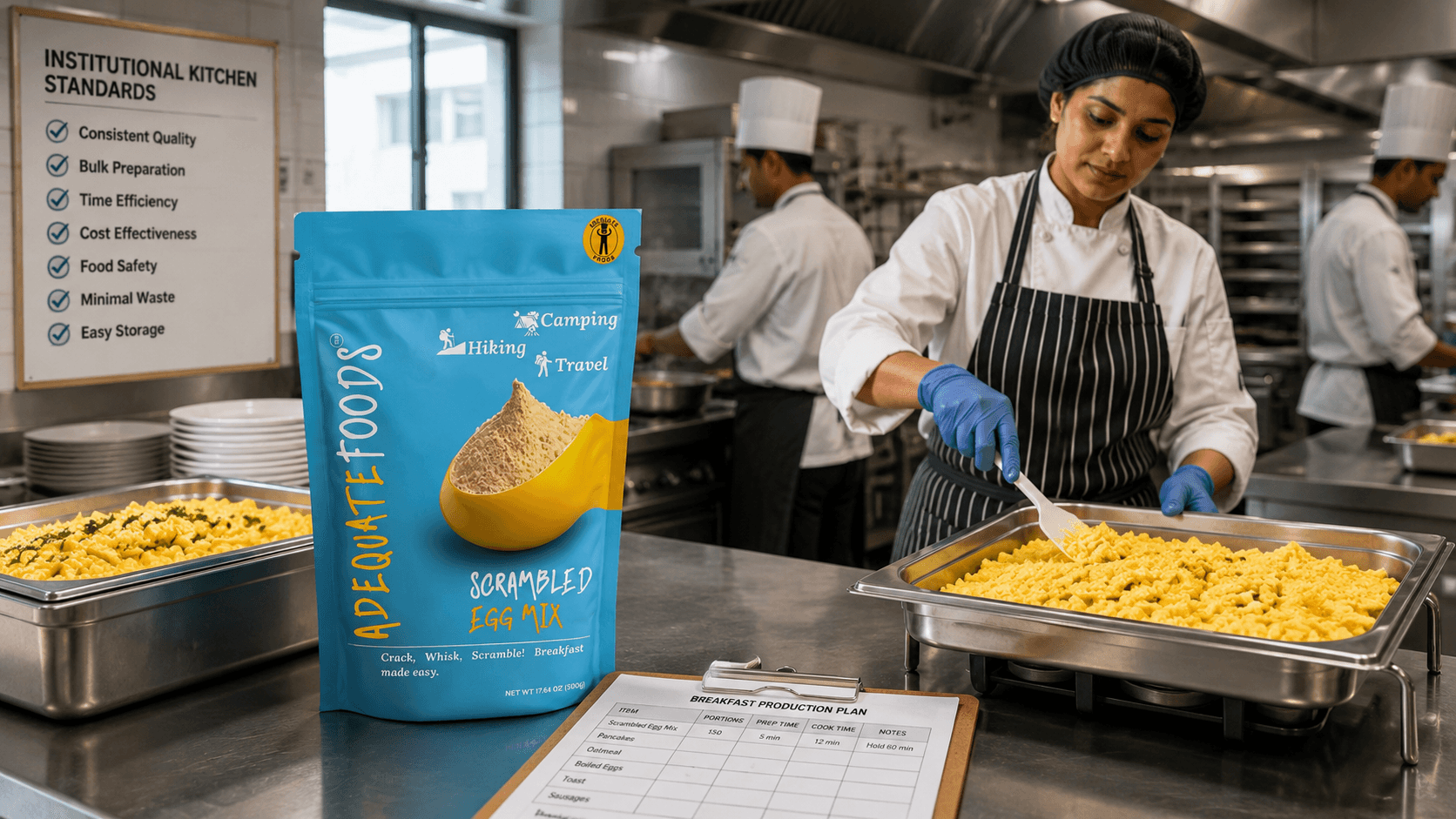
Planning Breakfast Operations with Scrambled Egg Mix
How foodservice operators plan breakfast production with scrambled egg mix.

KEY TAKEAWAY
Effective breakfast production planning with scrambled egg mix requires attention to volume forecasting, preparation scheduling, quality control and cost management. A systematic approach ensures consistent service with minimal waste.
Volume Planning
Accurate volume forecasting is the foundation of efficient breakfast production. Under-preparing leads to service delays and guest dissatisfaction. Over-preparing leads to waste and increased food cost. Historical data — covers by day of week, season and event calendar — provides the basis for daily production estimates.
Scrambled egg mix supports flexible production because additional batches can be prepared quickly if demand exceeds the forecast. This responsiveness is harder to achieve with fresh eggs, where cracking and beating additional quantities takes significantly more time.
Batch Scheduling
Rather than preparing the entire day's egg volume at the start of service, staggering preparation into multiple smaller batches produces fresher, better-quality scrambled eggs throughout the service period. Each batch is cooked and served within a short window, ensuring that guests receive eggs that are freshly made rather than held for extended periods.
The interval between batches should be calibrated to the demand pattern. During peak breakfast hours, batches may be prepared every ten to fifteen minutes. During slower periods, the interval can be extended.
Quality Standards
Defining clear quality standards for scrambled eggs — colour, curd size, moisture level, seasoning, serving temperature — and communicating these standards to all kitchen staff ensures consistency across shifts and team members.
Visual reference images, preparation checklists and periodic taste-testing help maintain standards over time. Using scrambled egg mix with its consistent starting composition supports these quality targets by reducing ingredient-side variability.
Cost Management
Food cost management for scrambled egg operations involves tracking powder usage against covers served, monitoring waste (both unused reconstituted mix and buffet over-production), and comparing actual food cost to budget targets.
Scrambled egg mix simplifies cost tracking because the input is measured by weight — making it straightforward to calculate cost per serving and identify trends. Regular review of these metrics supports informed decisions about portion sizes, production volumes and supplier negotiations.
MORE FROMTHE LAB.
Continue exploring the science, applications and possibilities behind modern egg ingredients.