Why Egg Yolk Works So Well in Sauces
The functional role of egg yolk in sauce-making — emulsification, thickening, colour and mouthfeel.
KEY TAKEAWAY
Egg yolk does more than add colour to a sauce. Its natural lecithin and lipoproteins create stable emulsions, its proteins thicken when heated, and its fats contribute the velvety mouthfeel that defines premium sauces.
Why Sauces Need Emulsification
Many of the world's most valued sauces — Hollandaise, béarnaise, mayonnaise, Caesar dressing — are emulsions. They combine fat (butter, oil) with water-based liquids (vinegar, lemon juice, stock) into a smooth, stable blend that neither separates nor appears greasy.
Achieving this stability requires an emulsifier — a substance that sits at the interface between fat and water droplets, preventing them from merging and separating. Egg yolk is one of the most effective natural emulsifiers available, and its use in sauce-making predates any understanding of the underlying chemistry.
How Yolk Emulsification Works
The emulsifying capability of egg yolk comes from its phospholipids (lecithin) and lipoproteins. These molecules have both hydrophilic (water-attracting) and lipophilic (fat-attracting) regions. When incorporated into a sauce, they position themselves at the surface of tiny fat droplets, creating a protective barrier that prevents the droplets from combining.
The result is a fine, stable dispersion of fat in water — an oil-in-water emulsion — that appears smooth and homogeneous. The smaller the fat droplets, the more stable the emulsion and the more luxurious the mouthfeel.
Thickening and Set
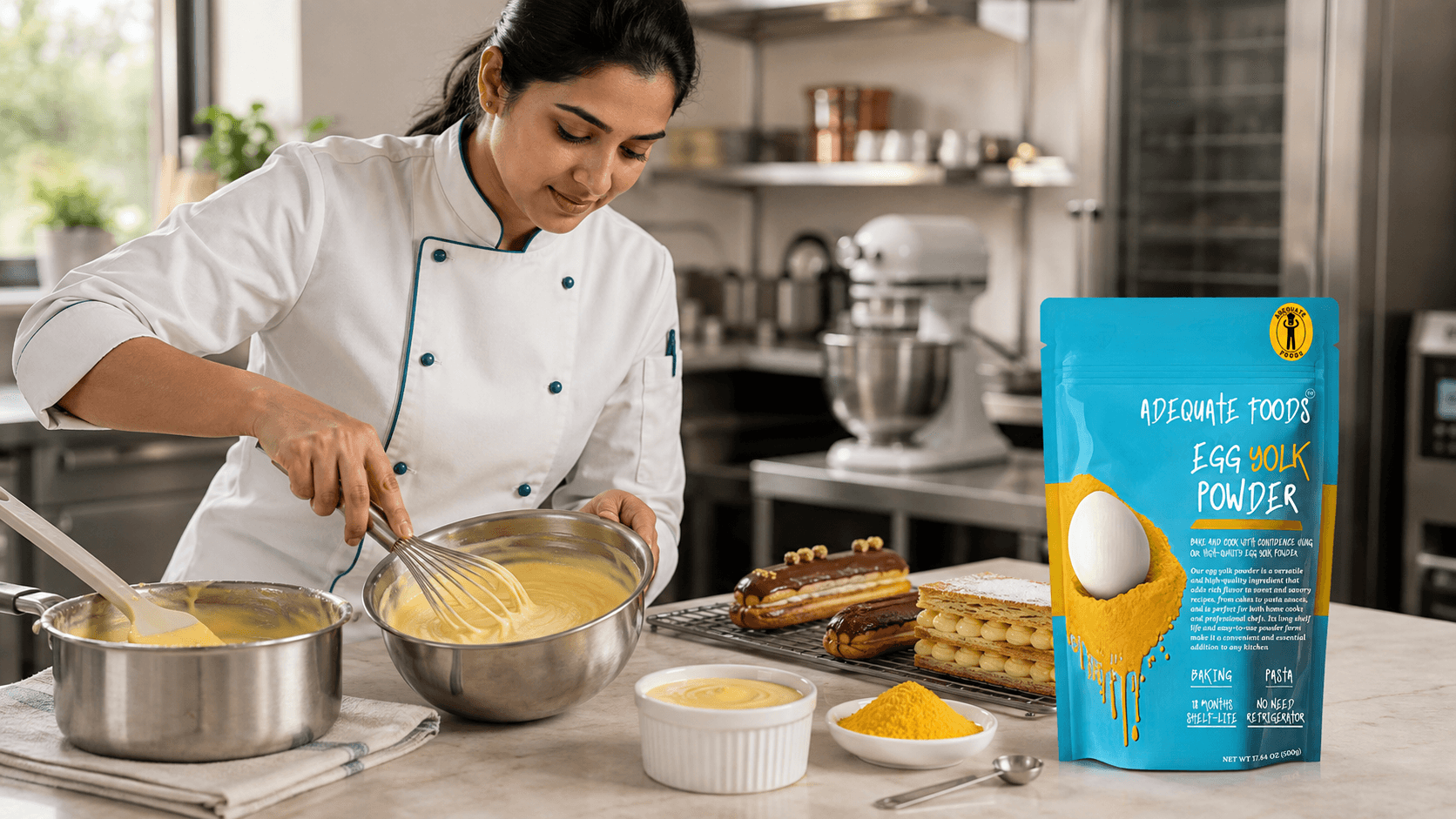
Beyond emulsification, egg yolk proteins contribute to sauce body through heat-induced thickening. When heated gently, yolk proteins unfold and link together, increasing the viscosity of the sauce. This is the mechanism behind the thick, pourable consistency of a properly made custard or the coating quality of a well-finished crème anglaise.
The key is temperature control. Heated too aggressively, yolk proteins coagulate into dense curds rather than a smooth gel. Gentle, controlled heating — or the use of a double boiler — allows the proteins to thicken the sauce without curdling.
Colour and Flavour Contribution
Egg yolk's natural golden colour enhances the visual appeal of sauces. A well-made Hollandaise has a warm, buttery yellow tone that comes largely from the yolk's carotenoid pigments. This colour contribution is entirely natural and requires no artificial colourants.
The flavour contribution of egg yolk is subtle but important. It adds a rich, rounded quality to sauces that complements the other ingredients without dominating. This richness is a combination of the yolk's fat content and its complex protein composition.
Using Egg Yolk Powder in Sauces
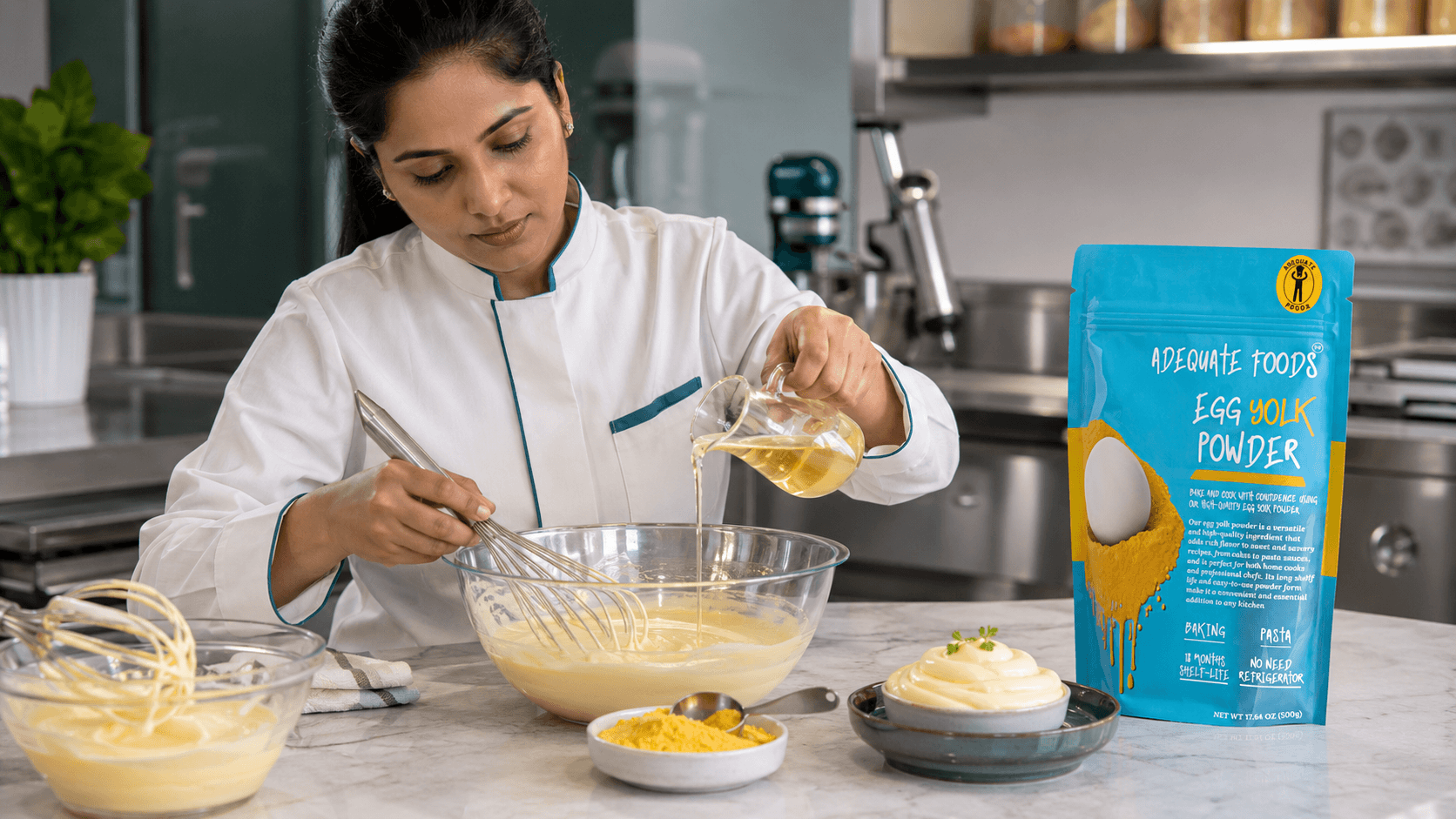
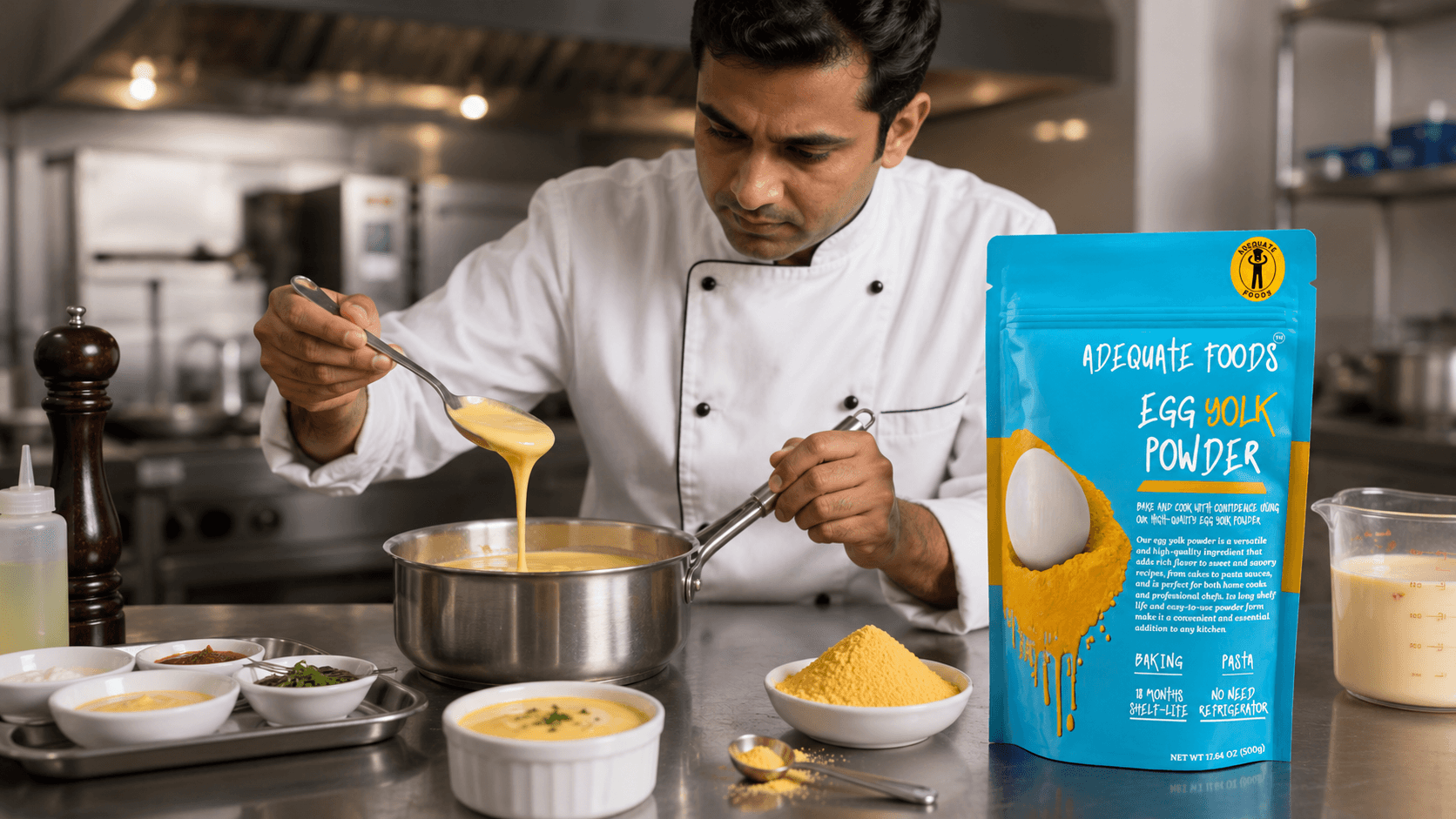
Egg yolk powder can be used in sauce preparation by reconstituting it with a small amount of water before incorporating it into the recipe. This pre-hydration step ensures that the powder dissolves completely and distributes evenly in the sauce.
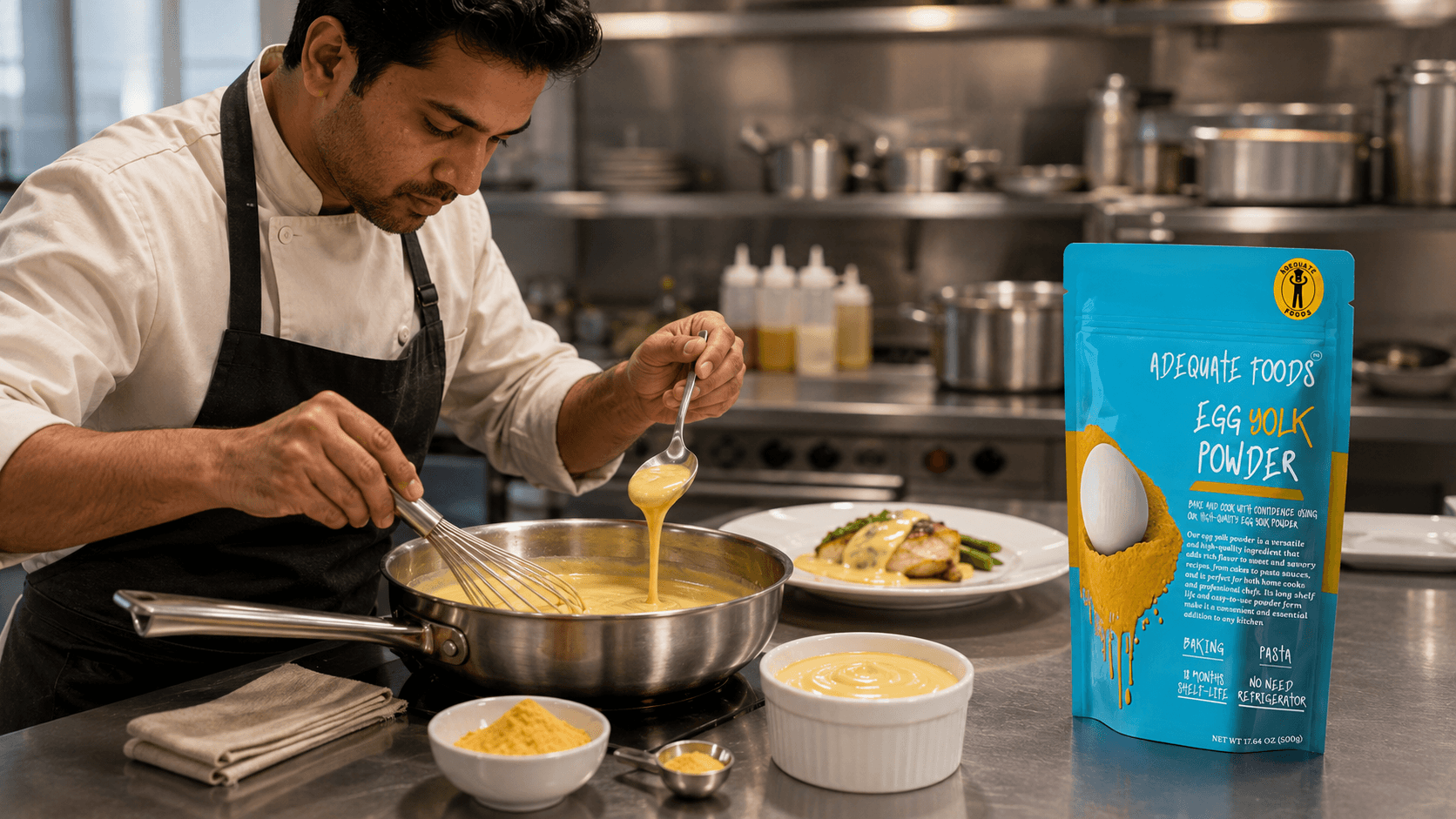
For emulsified sauces, the reconstituted yolk is typically combined with an acid (vinegar or lemon juice) and then whisked while fat is added gradually. The same techniques used with fresh yolk apply — slow fat addition, continuous whisking and careful temperature management. The result should be a smooth, stable emulsion with the characteristic richness and colour expected of a yolk-based sauce.
MORE FROMTHE LAB.
Continue exploring the science, applications and possibilities behind modern egg ingredients.