Egg White Powder in Baking: Where It Fits and Why
A practical look at how egg white powder supports structure, aeration and texture in baked goods.
KEY TAKEAWAY
Egg white powder offers bakers a convenient, shelf-stable source of protein that supports foam structure, crust development and moisture management in a wide range of baked products.
What Egg White Brings to Baked Goods
Egg whites are valued in baking primarily for their protein content. When heated, these proteins unfold and form a network that traps air and steam, contributing to the rise and structure of cakes, meringues and breads. Egg white powder provides this same functional capability in a dry, concentrated format.
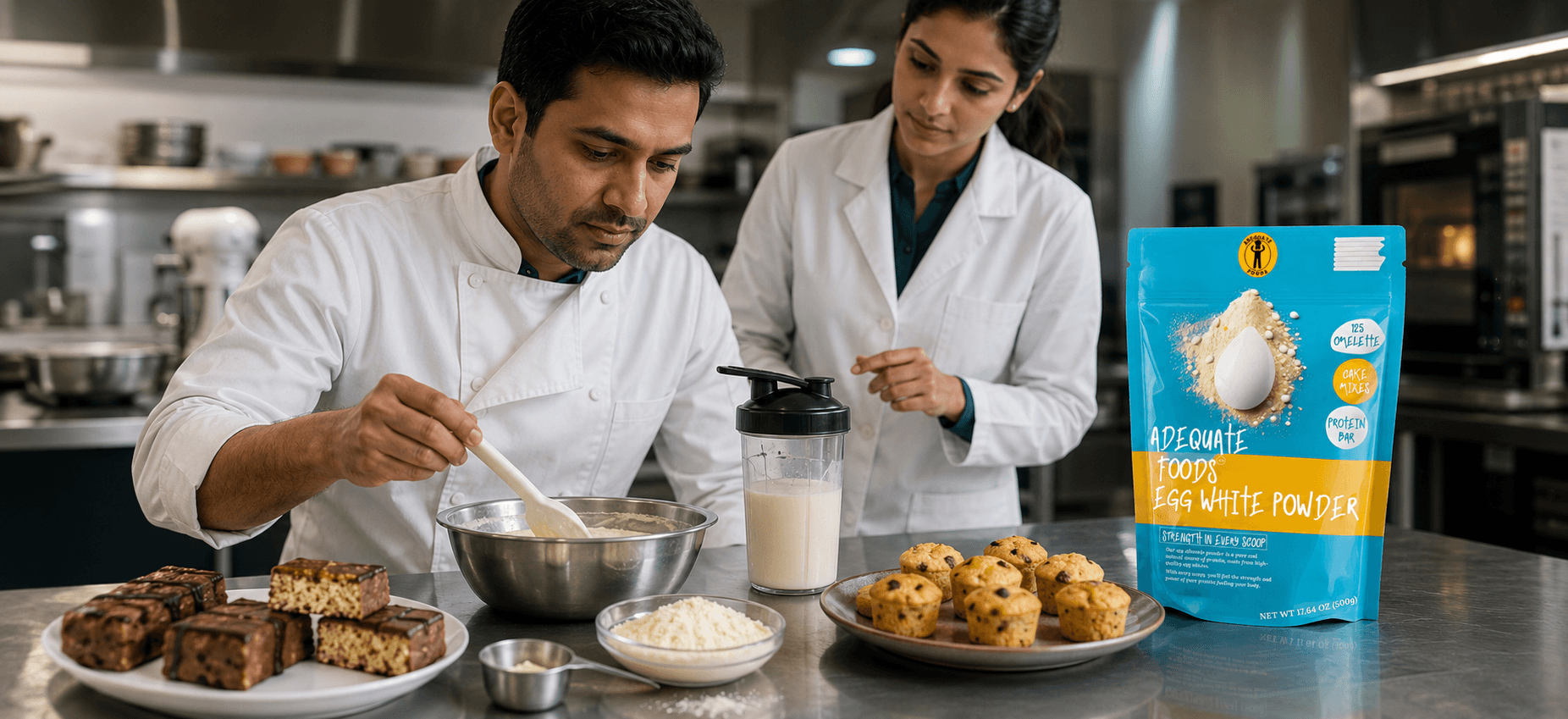
Unlike fresh egg whites, which vary in volume and protein concentration depending on egg size and freshness, egg white powder offers a consistent starting point. This consistency makes it particularly useful in settings where batch-to-batch uniformity matters — whether that is a commercial bakery producing hundreds of angel food cakes or a home baker working through a challenging macaron recipe.
Structure and Aeration
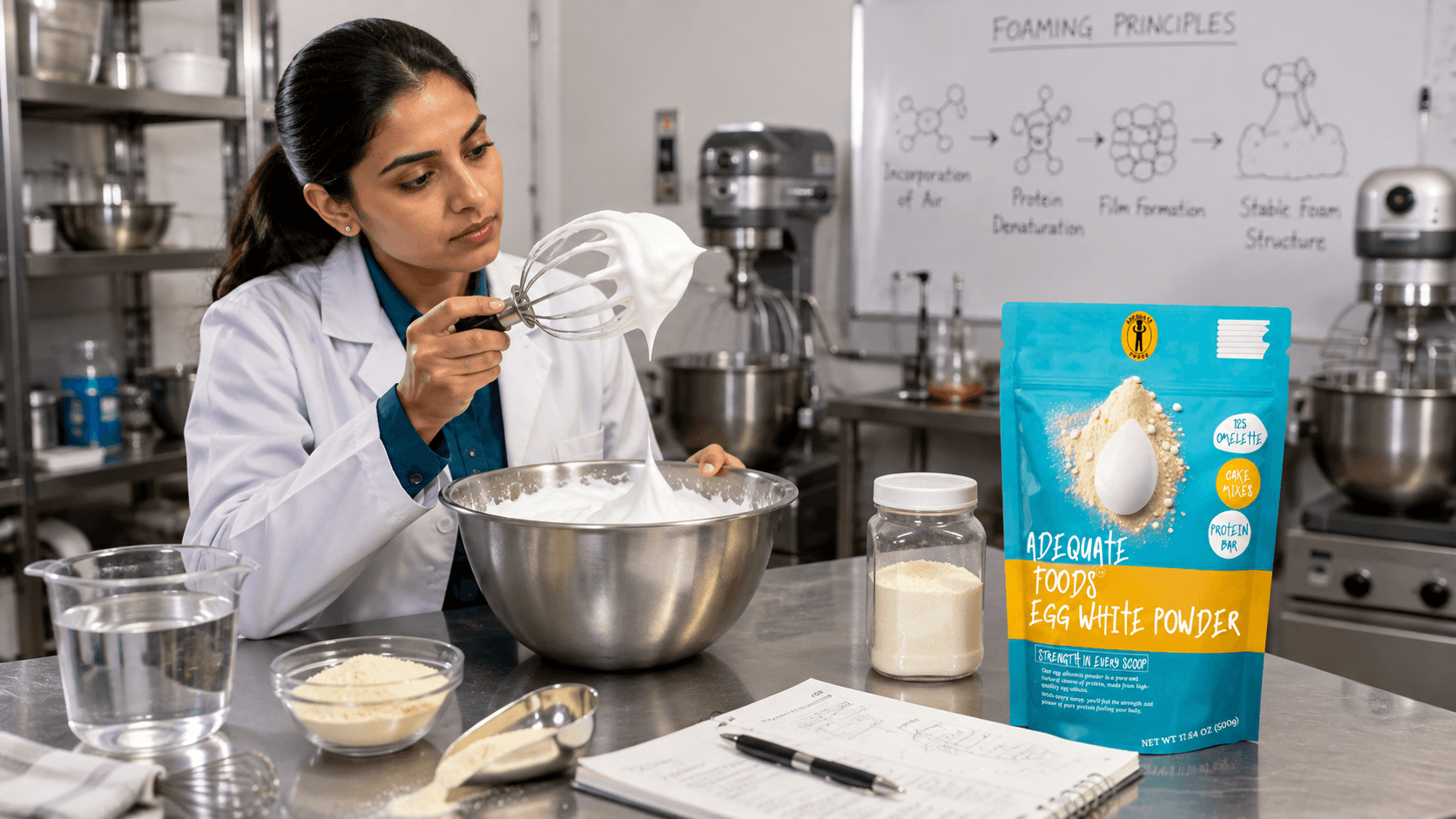
The primary proteins in egg white — ovalbumin, ovotransferrin and ovomucoid — each play a role in foam formation and heat-set structure. When whipped, these proteins migrate to air-water interfaces, creating stable bubble walls. During baking, heat causes these proteins to denature and cross-link, setting the foam into a rigid structure.
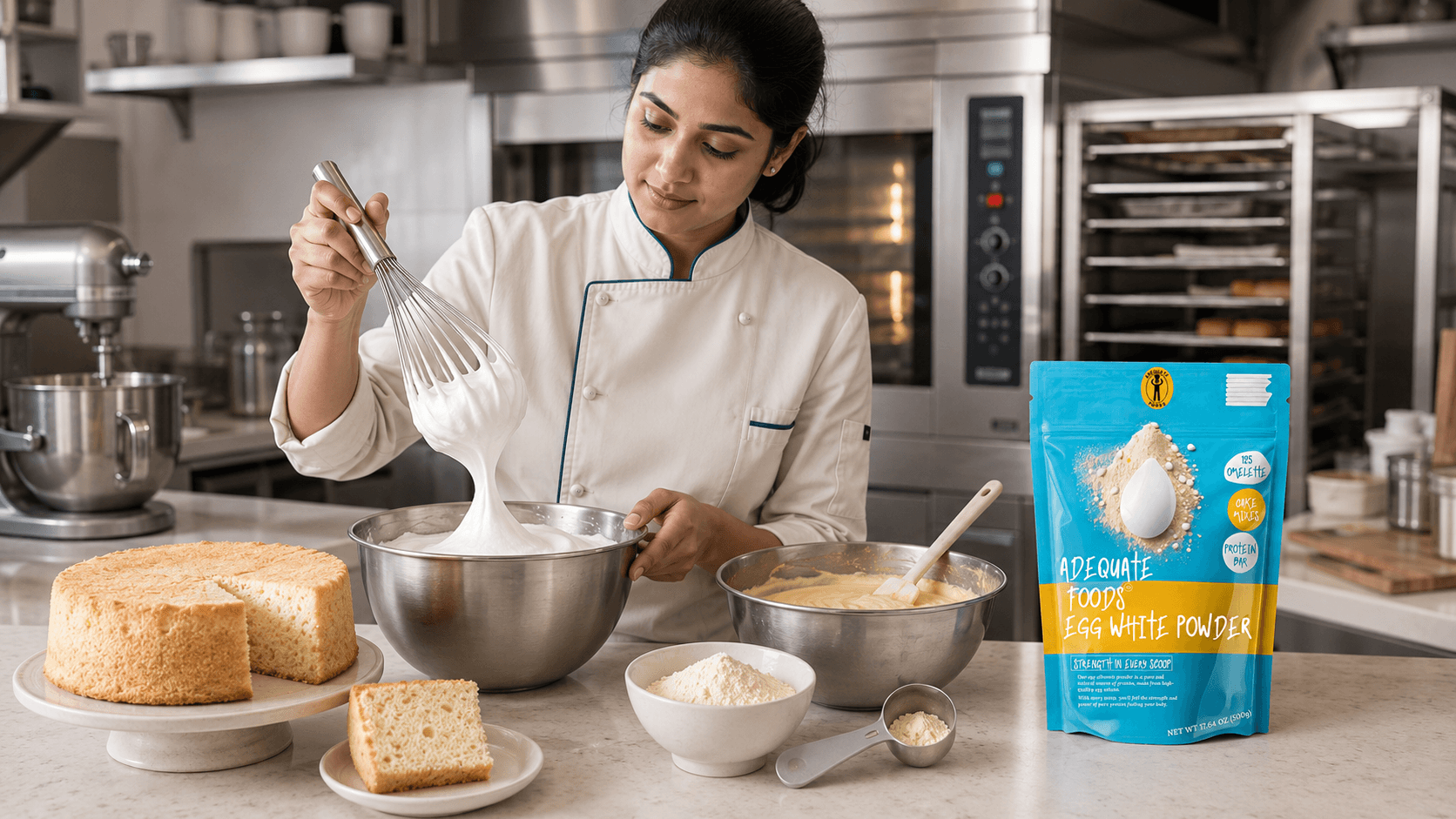
In sponge cakes and angel food cakes, this protein network is the primary structural element. Without gluten (as in gluten-free baking) or with minimal flour, egg white protein takes on even greater importance as the scaffolding that prevents collapse during cooling.
Egg white powder can be rehydrated before whipping or, in some formulations, incorporated dry into flour blends. The approach depends on the specific recipe and the desired result. For applications requiring maximum aeration, rehydration followed by whipping typically delivers the best foam volume.
- Egg white proteins create stable foams that set during baking.
- Consistent protein content helps achieve repeatable results.
- Both dry incorporation and rehydration methods are used depending on the application.
Crust and Moisture Management
Beyond aeration, egg white protein contributes to crust formation. As the surface of a baked product dries during baking, egg white proteins at the surface undergo Maillard-type browning reactions and form a crisp outer layer. This is particularly noticeable in breads where egg white washes create a glossy, firm crust.
Egg white powder can also help manage moisture in baked goods. Because the dry powder absorbs water during mixing, it can help control batter hydration levels. In recipes where excess moisture leads to dense or gummy textures, careful inclusion of egg white powder can contribute to a cleaner, drier crumb.
Working with Egg White Powder in Recipes
When substituting egg white powder for fresh egg whites, the key variable is the powder-to-water ratio used for reconstitution. This ratio affects the final protein concentration and, consequently, the functional performance in the recipe. Specific reconstitution ratios should be confirmed against the product specification for the powder being used, as different products may have different protein concentrations.
For commercial formulation, it is worth noting that egg white powder can interact differently with other ingredients compared to fresh whites. Fat contamination, for example, inhibits foaming in both fresh and powdered forms. Ensuring clean, grease-free equipment remains important regardless of the egg white format used.
Practical Considerations
Egg white powder should be stored in a cool, dry environment away from strong odours and direct sunlight. Once opened, the remaining powder should be sealed tightly to prevent moisture absorption, which can affect its functional performance over time.
For bakers evaluating egg white powder for the first time, starting with familiar recipes where egg whites play a clear structural role — such as meringues, angel food cakes or soufflés — provides the most informative comparison against fresh whites. Performance in these applications tends to highlight the powder's strengths and any adjustments needed for a given workflow.
MORE FROMTHE LAB.
Continue exploring the science, applications and possibilities behind modern egg ingredients.