Understanding Foaming in Egg White Ingredients
How egg white proteins create stable foams, what affects foam quality, and why it matters for food applications.
KEY TAKEAWAY
Foaming is one of egg white's most distinctive functional properties. Understanding how proteins create and stabilise air-in-liquid foams helps bakers and formulators get the best results from egg white ingredients.
How Egg White Foams Form
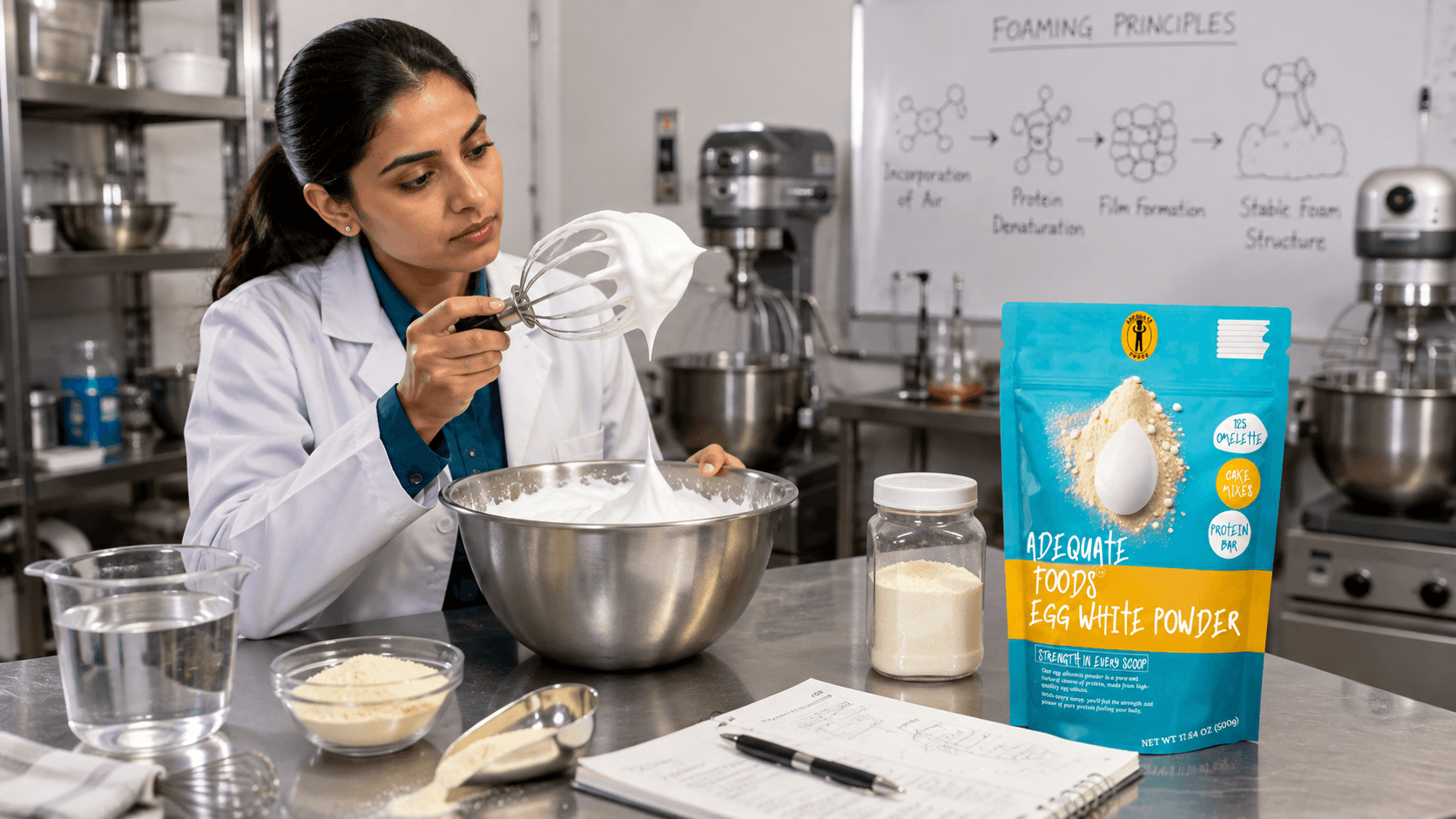
When egg whites are whipped, mechanical energy forces air into the liquid. Egg white proteins — particularly ovalbumin, ovotransferrin and ovomucin — migrate to the newly created air-water interfaces. There, they partially unfold and arrange themselves with hydrophobic regions facing the air and hydrophilic regions facing the water, forming a thin protein film around each air bubble.
This protein film is what distinguishes an egg white foam from simply agitated water. The film is elastic enough to stretch as bubbles expand, yet strong enough to prevent bubbles from merging and collapsing. The result is a stable, voluminous foam.
Factors That Affect Foam Stability
Several factors influence how well egg white foams form and how long they remain stable. Fat contamination is perhaps the most significant negative factor. Even trace amounts of yolk fat or residual grease on equipment can dramatically reduce foam volume and stability. This applies equally to fresh egg whites and reconstituted powder — clean, grease-free bowls and whisks are essential.
Temperature also plays a role. Room-temperature egg whites generally foam more readily than cold ones, as the proteins are more mobile and can migrate to interfaces more quickly. However, cold egg whites can produce more stable foams once fully whipped, because the protein film sets more firmly.
The presence of acid (such as cream of tartar) or sugar also affects foam behaviour. Acid lowers the pH, which helps proteins unfold and stabilise more readily. Sugar, added gradually during whipping, dissolves into the water phase and increases viscosity, which slows drainage and extends foam life.
- Fat contamination is the most common cause of poor foam performance.
- Room-temperature whites foam faster; cold whites may produce more stable foams.
- Acid and sugar each contribute to foam stability through different mechanisms.
Foaming with Egg White Powder
Egg white powder retains its foaming capability after spray drying, though the reconstitution process matters. Using the correct water ratio and allowing adequate hydration time before whipping helps the proteins fully dissolve and regain their surface activity.
Some egg white powders may foam slightly differently from fresh whites — the spray-drying process can partially denature some proteins, which may affect initial foam volume or whipping time. However, the resulting foams are generally functional for the intended applications, including meringues, soufflés, angel food cakes and mousse preparations.
Why Foaming Matters Beyond Meringues
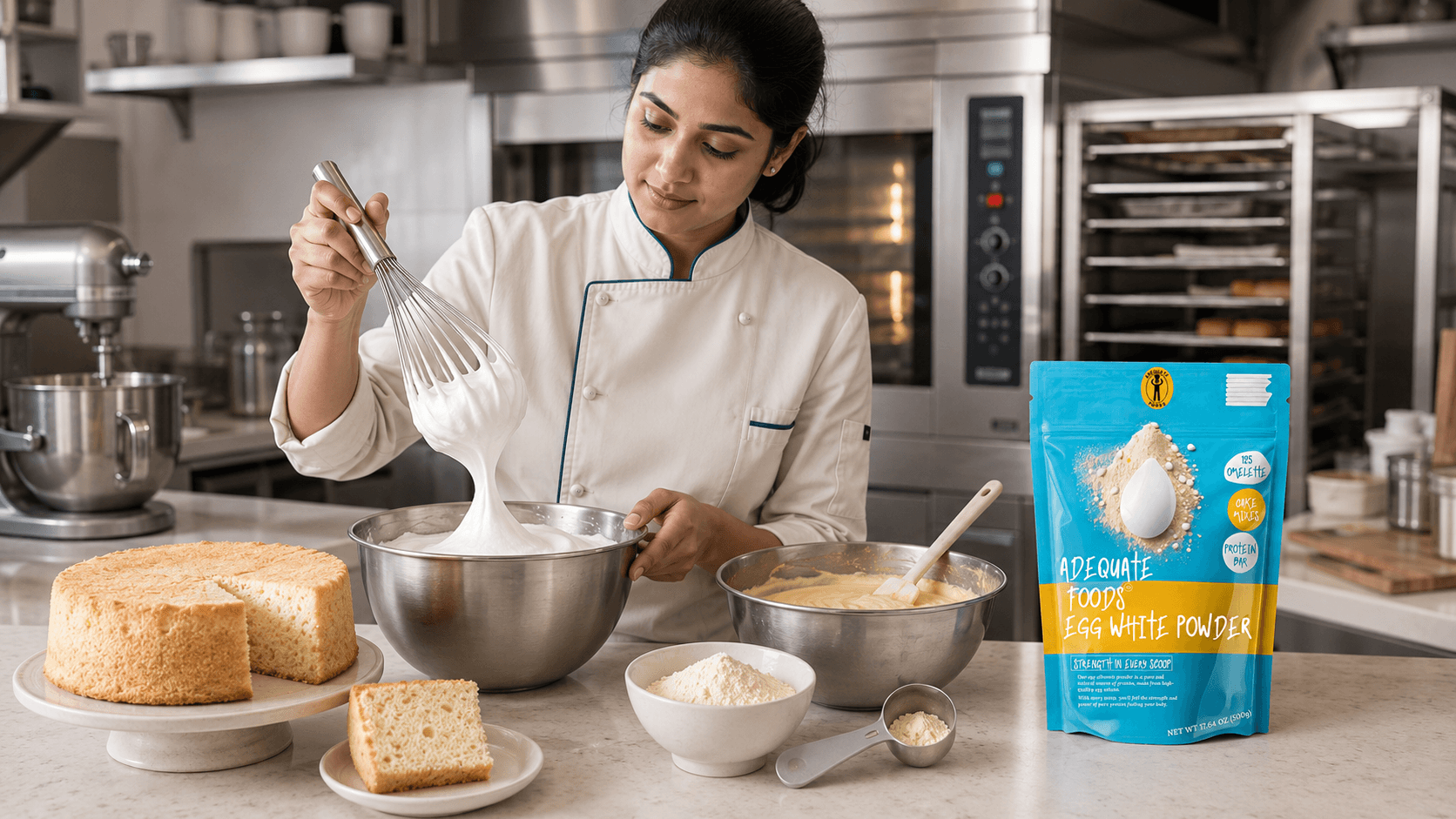
While meringues are the most visible application of egg white foaming, the same property is important in many other contexts. Sponge cakes rely on whipped egg whites for their characteristic lightness. Marshmallow production uses egg white foam as the structural base. Cocktail preparation uses egg white foam for texture and presentation.
In food manufacturing, egg white foaming is relevant in applications ranging from nougat and confections to protein bars and functional beverages where aeration affects texture and mouthfeel. Understanding how to optimise foaming — whether through ingredient choice, processing conditions or equipment selection — is a valuable capability for any operation working with egg white ingredients.
MORE FROMTHE LAB.
Continue exploring the science, applications and possibilities behind modern egg ingredients.