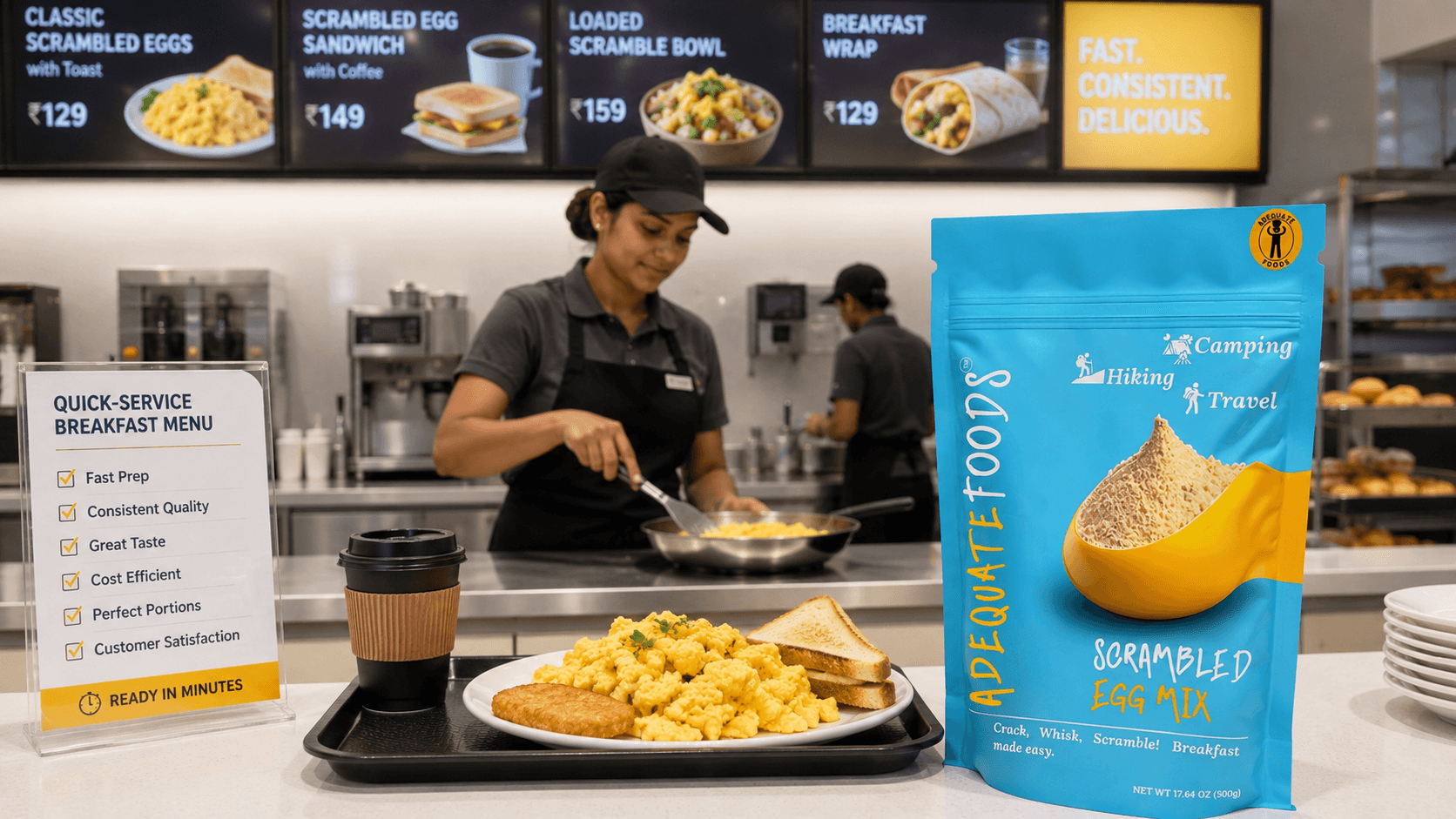
Whole Egg Powder for Institutional Foodservice
How institutional kitchens use whole egg powder to simplify breakfast and baking at scale.
KEY TAKEAWAY
Institutional foodservice — hospitals, schools, corporate canteens and military kitchens — operates under constraints of cost, consistency, safety and scale. Whole egg powder addresses several of these constraints simultaneously.
The Institutional Kitchen Context
Institutional kitchens serve large numbers of meals on a strict schedule, often with limited skilled labour and tight budgets. Menu variety may be constrained, but consistency and food safety are non-negotiable. These operations typically lack the luxury of selecting premium ingredients for each dish — they need reliable, cost-effective inputs that perform predictably every day.
Eggs are a dietary staple in institutional feeding, appearing at breakfast, in baked goods and as components of main dishes throughout the day. Managing fresh egg supply at institutional scale involves significant logistical complexity.
Simplifying Breakfast Operations
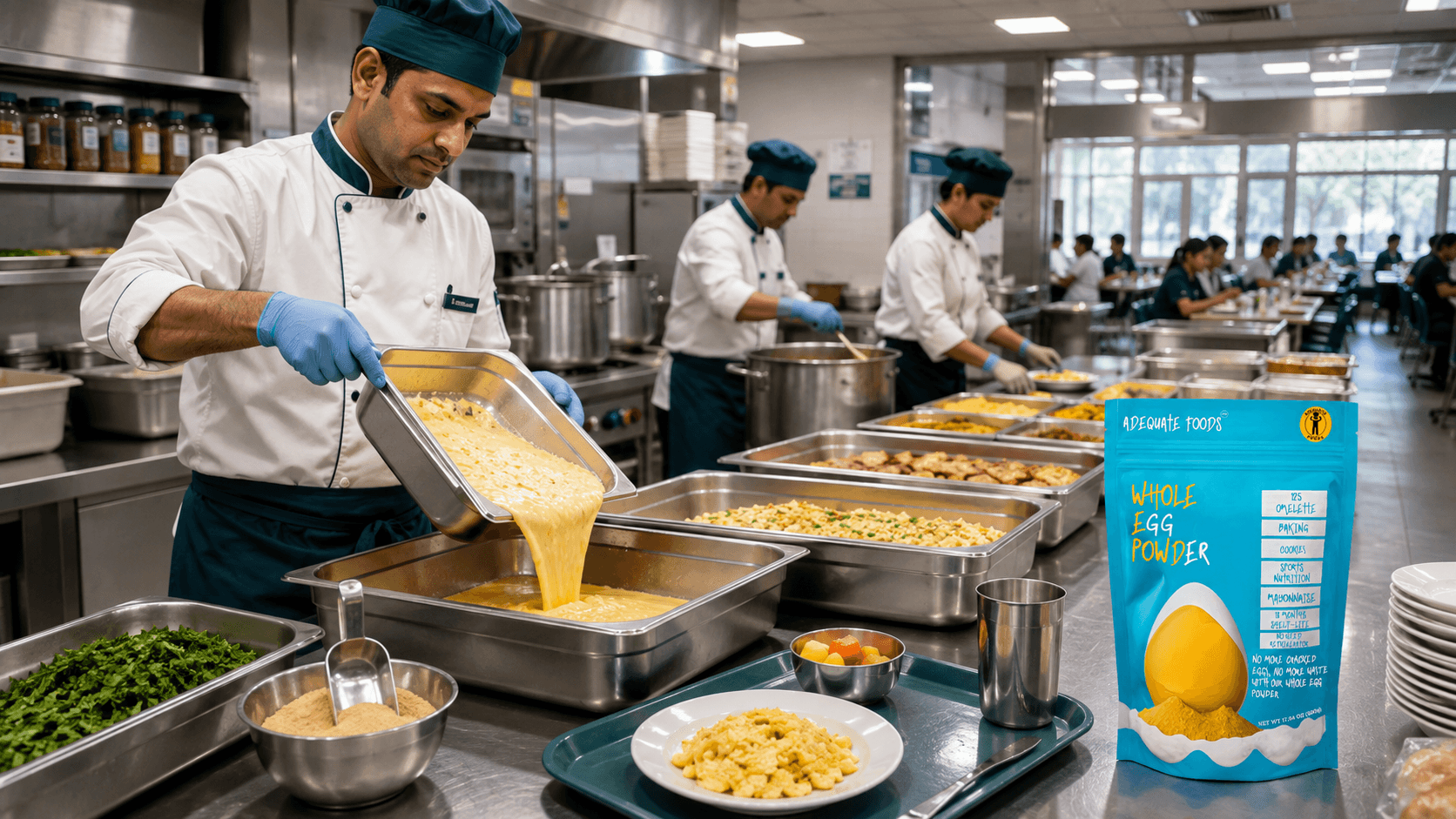
In a hospital, school or military kitchen producing hundreds of breakfast servings, cracking and beating fresh eggs is a labour-intensive and time-consuming process. It requires trained staff, generates shell waste, creates cross-contamination risks and produces variable results depending on the eggs used.
Whole egg powder streamlines this process. Measured quantities of powder are reconstituted with water in large mixing containers, producing a uniform egg base ready for scrambling, omelettes, French toast or baking. The process is faster, generates less waste and produces more consistent results.
Baking at Scale
Institutional kitchens produce baked goods in quantity — muffins, cakes, bread and desserts are common menu items. Whole egg powder simplifies the recipe scaling process, eliminates egg-counting errors and ensures that every batch receives the same protein and fat contribution.
For kitchens that rely on standardised recipes distributed across multiple locations, specifying whole egg powder by weight rather than shell eggs by count improves consistency and simplifies training for kitchen staff.
Food Safety Considerations
Shell eggs are a recognised vehicle for Salmonella and other food safety hazards. In institutional settings serving vulnerable populations — hospital patients, young children, elderly residents — the food safety implications of egg handling are particularly significant.
Whole egg powder is produced from pasteurised eggs, which reduces the pathogen risk associated with raw egg handling. While standard food safety practices (temperature control for reconstituted product, clean preparation surfaces, allergen management) still apply, the starting material is inherently safer than unpasteurised shell eggs.
Procurement and Inventory
For institutional procurement, whole egg powder offers predictable pricing, stable supply and simplified inventory management. It can be ordered in quantities aligned with anticipated consumption, stored at ambient temperature and rotated on a FIFO basis without the urgency imposed by perishable egg shelf life.
These logistics advantages are especially relevant for institutions in remote locations, those with limited cold storage capacity, or operations subject to procurement cycles that prevent frequent fresh egg deliveries.
MORE FROMTHE LAB.
Continue exploring the science, applications and possibilities behind modern egg ingredients.